
Hub Resources

Hub Project Resources
-
Despite their widespread presence on pastoral leases across northern Australia, spinifex pastures are rarely featured in workshops or publications. To help address this, a collaborative project was undertaken to bring together relevant mapping data, existing publications and resources, and knowledge held by experienced land managers and stakeholders.
FACTS SHEETS
Read here Spinifex Pastures Project
Read here Spinifex Facts
Read here Spinifex Facts pg 2
Burning Spinifex to Influence Pasture Quality & composition
Cool Fires, Hot Fires & Spinifex
Spinifex Pastures: Characteristics & Management FULL report
Insights into Spinifex - FULL report
-
The remote Western Australian (WA) Rangelands are typified by droughts, fires, and flooding rains. Mounting pressures include intensifying climate events, limited human capital, isolation, and the ongoing trend of widespread desertification and biodiversity loss. However, there are bright pixels of land managers reversing these trends of degradation through their mindset and management of grazing, fire, rainfall-runoff, and ecology to holistically restore vegetation, water, life, and productivity to the landscape – the goal of ‘landscape rehydration.’
These innovative leaders are gradually growing in number and have many stories and lessons to tell about their journey. However, if their stories, lessons, and knowledge are not heard and transferred to the next generation of land managers, extensionists, and policymakers alike, progress towards healthy, rehydrated landscapes will continue to be hindered and disconnected as it has been for the past 40 years—despite the array of incredible innovation (Campbell et al. 2017).
Email: sally.courtney@cdu.edu.au for a copy of the report
-
In 2019 Rangelands NRM supported the West Kimberley LCDC to complete a Smart Farms project:
“Bringing soils back to life through waterponding” . The project provided a demonstration of the waterponding land rehydration technique, designed and surveyed by Ray Thompson and installed by experienced grader operator Ben McKillop.
• The following case study builds upon the original case study, available in Rangelands NRM Rehydration Resources library, with monitoring done in 2023 and 2024 to follow up on landscape change at 3 of the stations involved in 2019.
For a copy of this report, email sally.courtney@cdu.edu.au
-
This document provides land managers an understanding of landscape rehydration theory and practical guidance for implementing techniques and solutions in the arid zones of Australia. It has been prepared by the Mulloon Institute as part of the landscape rehydration demonstration project for Central Australia, Centralian, jointly funded through the Australian Government’s Future Drought Fund and the Northern Hub.
-
This guide often refers to the publication Striking the Balance, Second Edition (2010), written by Fergal O’Gara and published by the Northern Territory Government. It remains the single most comprehensive publication of information about farming in the Northern Territory, and all farmers in the NT are strongly encouraged to read it and use its insights in conjunction with this guide.
Whether you're a seasoned grower looking to refine your techniques or a newcomer eager to embark on a journey in fodder production, the "Northern Territory Fodder Production Guide" is here to support you every step of the way.
-
At the tail end of 2022, Angus and Toby Nichols of Edah Station facilitated the hosting of a workshop featuring Phil Tickle, Managing Director of Cibo Labs. This was done as part of the Rangelands NRM “Revitalising the Southern Rangelands” project which has been set up with the goal of educating and supporting the pastoral industry through advanced and refined grazing management techniques.
-
The Camp family provide an exemplary case study of a pastoral station which regenerated its land base while building a solid and profitable cattle operation in the Kimberley. Proof that pastoralism can be environmentally, economically and socially sustainable, and can be an effective regenerative land use in the rangelands.
-
The Forage Champions Project aims to educate, guide, strengthen and support northern Australian growers in the forage and fodder industry by showcasing best practice management. Our goal is to enhance the productivity, profitability, adaptability, sustainability, and resilience of growers in northern Australia.
We have recognised five successful growers in the Northern Territory as ‘Industry Champions’ to highlight the diverse operations and strategies employed across the region. Each grower is featured in an individual Case Study, illustrating their unique challenges, achievements and approaches. These Case Studies provide real-world examples, valuable insights and practical guidance, offering lessons that can benefit others in the industry.
This project is supported by The Northern Hub, through Funding from the Australian Government’s Future Drought Fund.
-
The intent of this project is to demonstrate drought resilience at scale and assess the environmental and economic outcomes of landscape rehydration in this arid, pastoral landscape. Working landscape rehydration demonstration sites were designed and constructed on creek catchments at the four participating stations.
-
This factsheet explores how climate change is reshaping Country in Northern Australia, focusing on key species and ecosystems such as magpie geese, sugarbag bees, sea turtles, barramundi, dugongs, crocodiles, and floodplains. It outlines the effects of rising temperatures, sea level rise, extreme weather, and altered rainfall patterns on traditional food sources, nesting habitats, and cultural landscapes. Developed with support from the Future Drought Fund through the Northern Hub, the factsheet combines scientific insights with on-Country implications, showing how environmental change threatens biodiversity, cultural practices, and livelihoods in the Top End.
-
Developed for the Kimberley Pilbara Cattlemen’s Association with support from the Northern Hub and the Australian Government’s Future Drought Fund, this factsheet provides a comprehensive overview of leading digital tools to support decision-making across northern beef enterprises. Covering everything from daily water monitoring and fire risk management to long-term climate planning and infrastructure development, the guide breaks down the strengths, uses, and accessibility of key technologies like DR.SAT, NAFI, Cibo Labs PastureKey, AussieGRASS, and Paddock Power. With clear comparisons, practical examples, and links to further learning, this resource empowers pastoralists to select the right tools to boost resilience, efficiency, and productivity in diverse and challenging rangeland conditions.
-
This project, funded by the Northern Hub through the Department of Agriculture, Fisheries and Forestry's Innovation grant, utilises the power of AI to improve the detection and reporting of livestock diseases. By using an AI programming overlay on a livestock emergency animal disease image library, the project offers a more accurate, swift, and efficient method of identifying disease symptoms.
Read Here
-
The Department of Primary Industries and Regional Development (DPIRD) commissioned Marsden Jacob Associates to examine the financial and practical viability of alternative surface irrigation systems for growers in Stage 1 of the ORIA. The assessment evaluates the potential for transitioning from the current siphon irrigation system to three alternatives: SPTB irrigation, bank-less irrigation, and tailwater recycling.
Email: sally.courtney@cdu.edu.au and we will send you the full report.
Partner & External Resources
-
This report by, F. P. O’Gara and R. J. Eastick, covers key concepts of legumes in agriculture, their establishment, productive and environmental benefits, and challenges in managing legume grass pastures in the Top End.
-
The Understanding Mango Crop Nutrition Guide summarises key information on essential nutrients and management practices.
-
CliMate contains eight analyses delivered as: a Web App on all devices and iOS (iPhone, iPad).
It is designed for decision makers who use knowledge of system status (e.g. soil water, heat sum) and probabilities of weather events to manage risk.
Australian CliMate uses Bureau of Meteorology data and the Queensland Government’s Silo database and incorporates ideas from previous decision support tools.
-
Grazing management guide tailored to Kimberley & Pilbara region.
-
Grazing management guide tailored to Barkly Tablelands & Alice region.
-
Grazing management guide tailored to Victoria River District and East Kimberly region.
-
Since 2017, the Northern Territory Government has used Aboriginal water reserves to help Aboriginal people get better access to water resources.
Read the strategic Aboriginal water reserves policy framework here
-
The plan applies to a 9,282km2 area within the Daly Roper Beetaloo water control district.
-
The Territory water plan is the Northern Territory’s (NT) first whole‑of‑government strategic plan for water.
The plan aims to deliver water security for all Territorians, now and into the future
With aspirations for a growing population and an economy of $40 billion by 2030, and the challenge of climate change, we need a plan for water security that fits the Territory context.
Priority areas and actions in the plan aim to balance the needs for safe and reliable water for drinking and economic development with maintaining healthy country and ecosystems, and improving the liveability of the Territory.
Soil Health Resources
-
Soil resources include:
Books
Videos
Podcasts
Fact sheets
Online tools
Case studies
Apps for soil mapping, sampling, and analysis
Foundation information about soils and landscapes
‘How to’ information on soil sampling, field testing and issue diagnosis.
-
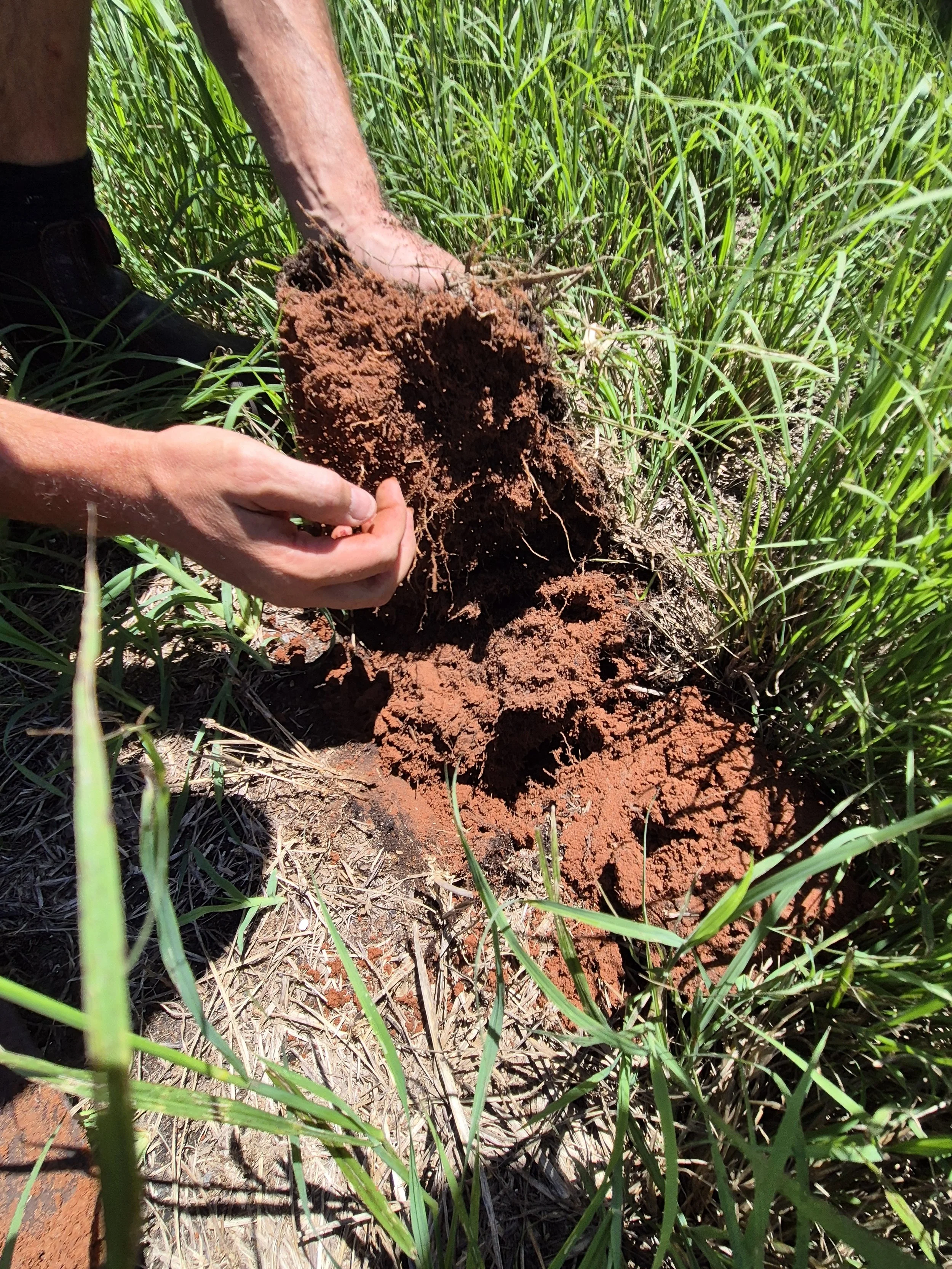
Soil tests are an important way to measure physical, chemical and biological properties of your soil as indicators of your soil health. Soil analysis can identify amount and availability of nutrients, existing or potential soil constraints to plant growth, and help guide practices such as fertiliser requirements or crop suitability.
-
In the NT, soils are an important natural resource for land-based agricultural industries. These industries and the soils that they depend on are a major contributor to the Northern Territory economy and need to be managed sustainably.
-
The National Soil Action Plan 2023 to 2028 – the first under the 20-year strategy – will help to build the foundation for subsequent plans. The action plan sets out priority actions that have been committed to by the Australian and state and territory governments in partnership with the soil science and research community, not-for-profits, regional Natural Resource Management organisations, industry bodies and the private sector to focus on soil protection and improvement efforts over the next 5 years.
-
Hub Project Videos
AgTech KPCA - Roebuck Station
Regen ag - Alejandro Carillo
Over-sowing Stylos - Benefits
Over-sowing Stylos - Establishment
Soil Moisture - Ballongilly Farm
Rehydration - Central Australia
Landscapes of Resilience - Duck Estate