
Do They Know Something We Don’t?
Date Published
12/03/2025
For further information, please contact:
Senior Communications and Stakeholder Engagement Officer:
Ayesha Woibo
ayesha.woibo@cdu.edu.au +61 8 8946 6167
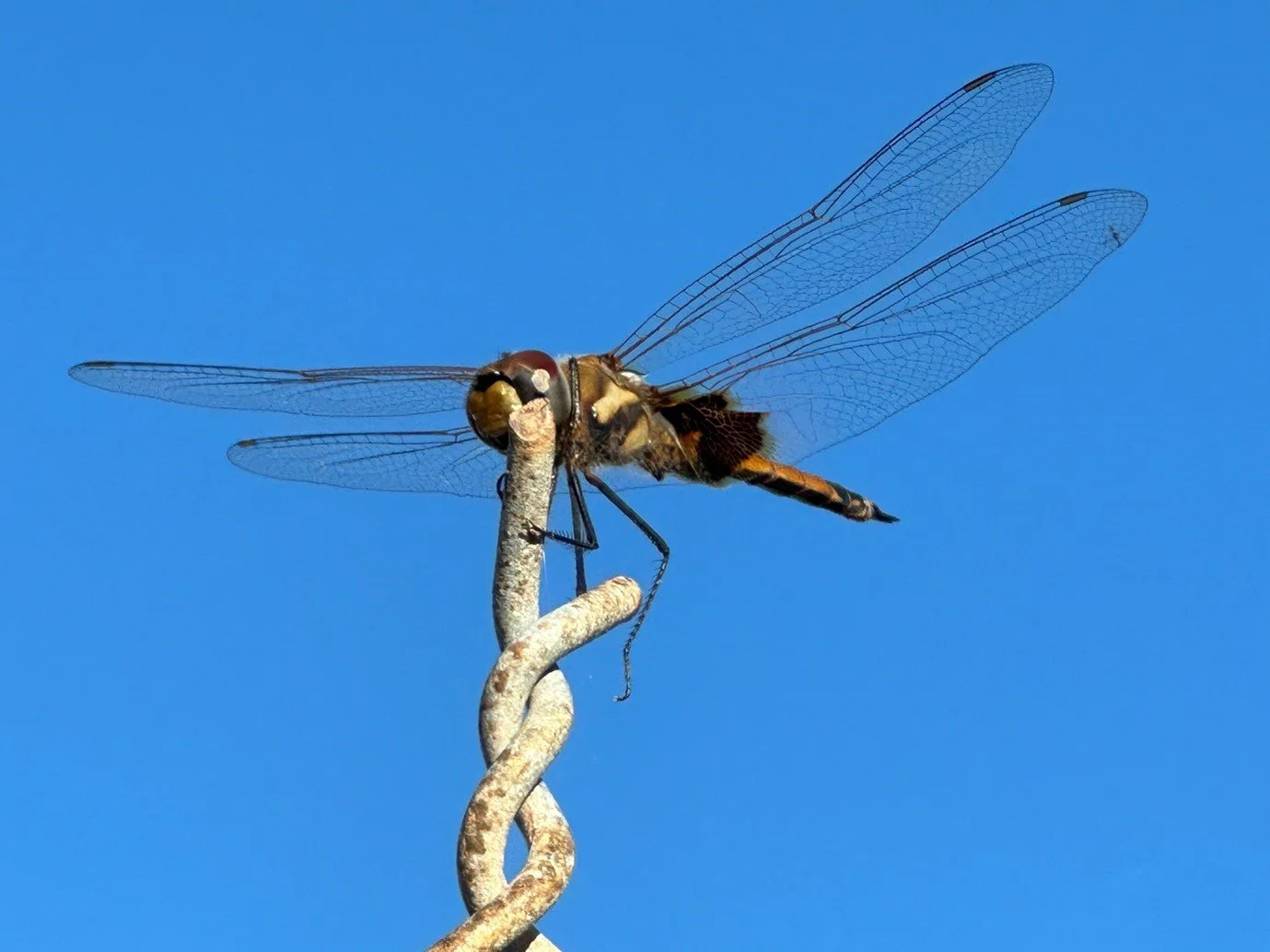
Across northern Australia, the sight of dragonflies has long been seen as a sign the Dry Season is on its way. It’s generally a welcome sign as dragonflies are an excellent natural predator of mosquitoes, and people like them. But is there more to this natural phenomenon than we know?
In recent weeks, large numbers of dragonflies have appeared earlier than usual, sparking discussions among locals, farmers, Traditional Owners, and scientists alike.
The Northern Hub at CDU is exploring these patterns as part of its Preparation and Planning initiatives. Understanding environmental indicators is key, particularly for agriculture, where seasonal changes influence land management, crop planning, and livestock care.
Professor Jenny Davis from CDU explains that these swarms may be linked to shifting wind patterns. "The dragonfly swarms are usually a sign that the winds are coming from the south and east, rather than the northwest – which is the predominant wind direction during the monsoonal Wet. The drier winds from the SE bring the large-winged dragonflies (gliders and flutterers) across to the coast from the inland wetlands and those out along the floodplain to Kakadu NP. Normally, these herald the arrival of the Dry Season in late March or early April. However, it has been an unusual Wet Season this year – so anything could happen."
Mel McDonald, a Katherine cattle producer says, "I've seen dragonflies appear well before the Wet Season ended, so I wonder if they’re more of an indicator of how long the Wet has been rather than when it will end. When I lived near Broome, there were always heaps of dragonflies, and I remember thinking, 'I hope the Wet is not over yet because I need the grass and growing season to continue”
Mark Flynn, Katherine rural block owner reflects, "I checked a wet paddock yesterday, and there were no dragonflies, so their appearance might not be consistent everywhere. Indigenous knowledge has always been reliable when it comes to seasonal changes, and I was always told that red dragonflies indicate the end of the rains."
The seasonal significance of dragonflies is also recognised in the Kimberley region. Tanin Baxter, CEO of Bidyadanga, agrees that the early appearance of dragonflies is a sign that the seasons are shifting in the Kimberley as well. "When the dragonflies are about, it signals the change in seasons is coming in our region too."
Despite popular belief, scientists remain cautious about relying solely on dragonflies as seasonal indicators. Professor Davis says, "Dragonflies are just one piece of the puzzle. While they respond to changing environmental conditions, factors like temperature shifts, rainfall patterns, and soil moisture levels all play a role in determining the true transition between seasons."